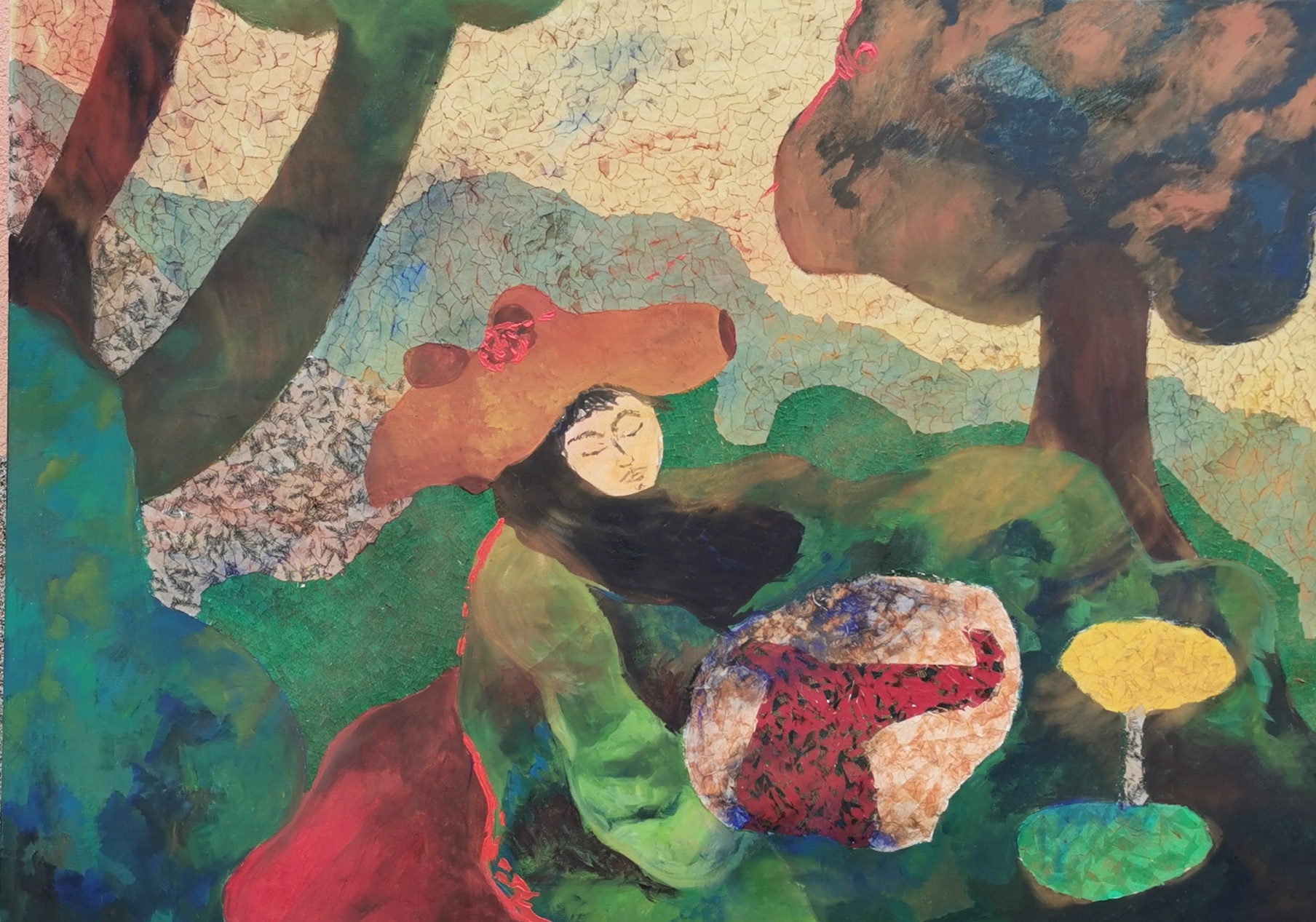
IUS Art Gallery Opens Metamorphoses by Ira Skopljak-Viteškić
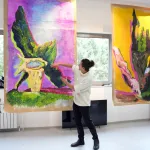
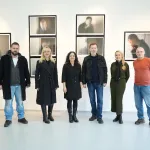
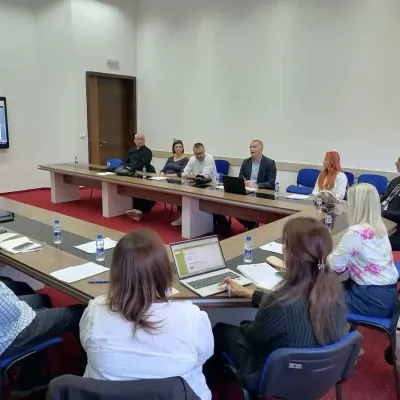
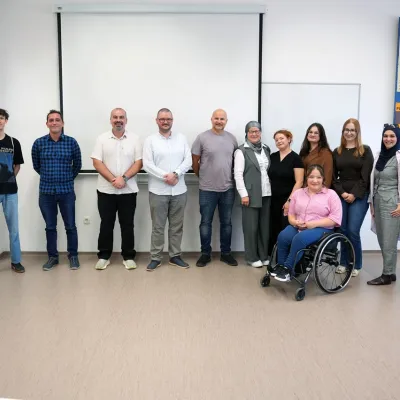
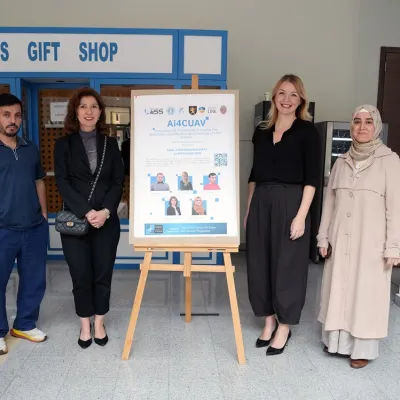
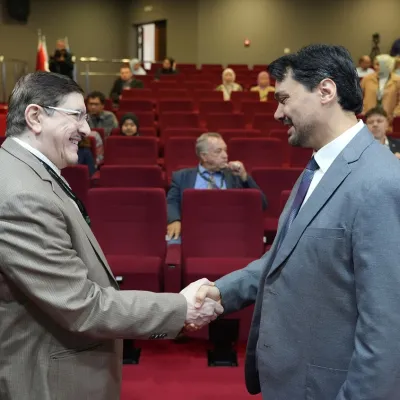
The IUS Art Gallery opened the exhibition Metamorphoses by Ira Skopljak-Viteškić on May 7, 2026. The exhibition was curated by Prof. Dr. Meliha Teparić, who introduced the artist and welcomed visitors at the opening. Following the curator’s introduction, Asst. Prof. Dr. Nadira Puškar Mustafić delivered the opening speech and review of the exhibition. The artist then greeted the guests and thanked them for attending. The exhibition remains open to visitors until May 21, 2026.
Ira Skopljak-Viteškić was born in Sarajevo. She completed the School of Applied Arts in Sarajevo, Department of Textile Design, and later graduated from the Academy of Fine Arts in Sarajevo, Department of Art Education. She currently works as a senior teaching assistant at the Academy of Fine Arts in Sarajevo, where her work is strongly connected to art technology, painting technology, wall painting, conservation, paper conservation, and the study of materials and artistic techniques. Her master’s thesis focused on the technological aspects and symbolism of old painting techniques and materials in her own paintings, which is especially relevant to the layered and materially rich surfaces presented in Metamorphoses.
Metamorphoses: Form as Passage
A review by Asst. Prof. Dr. Nadira Puškar Mustafić, Department of English Language and Literature
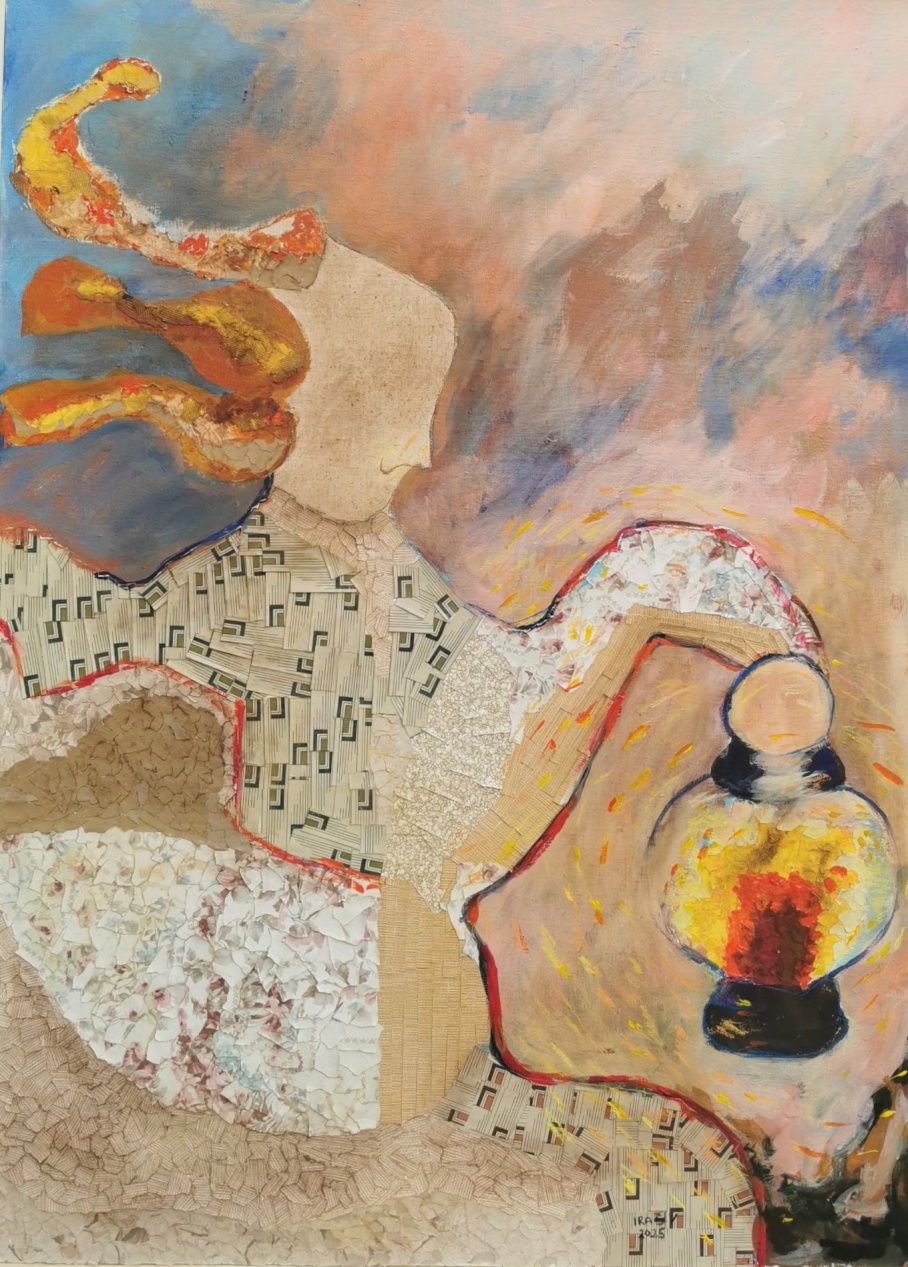
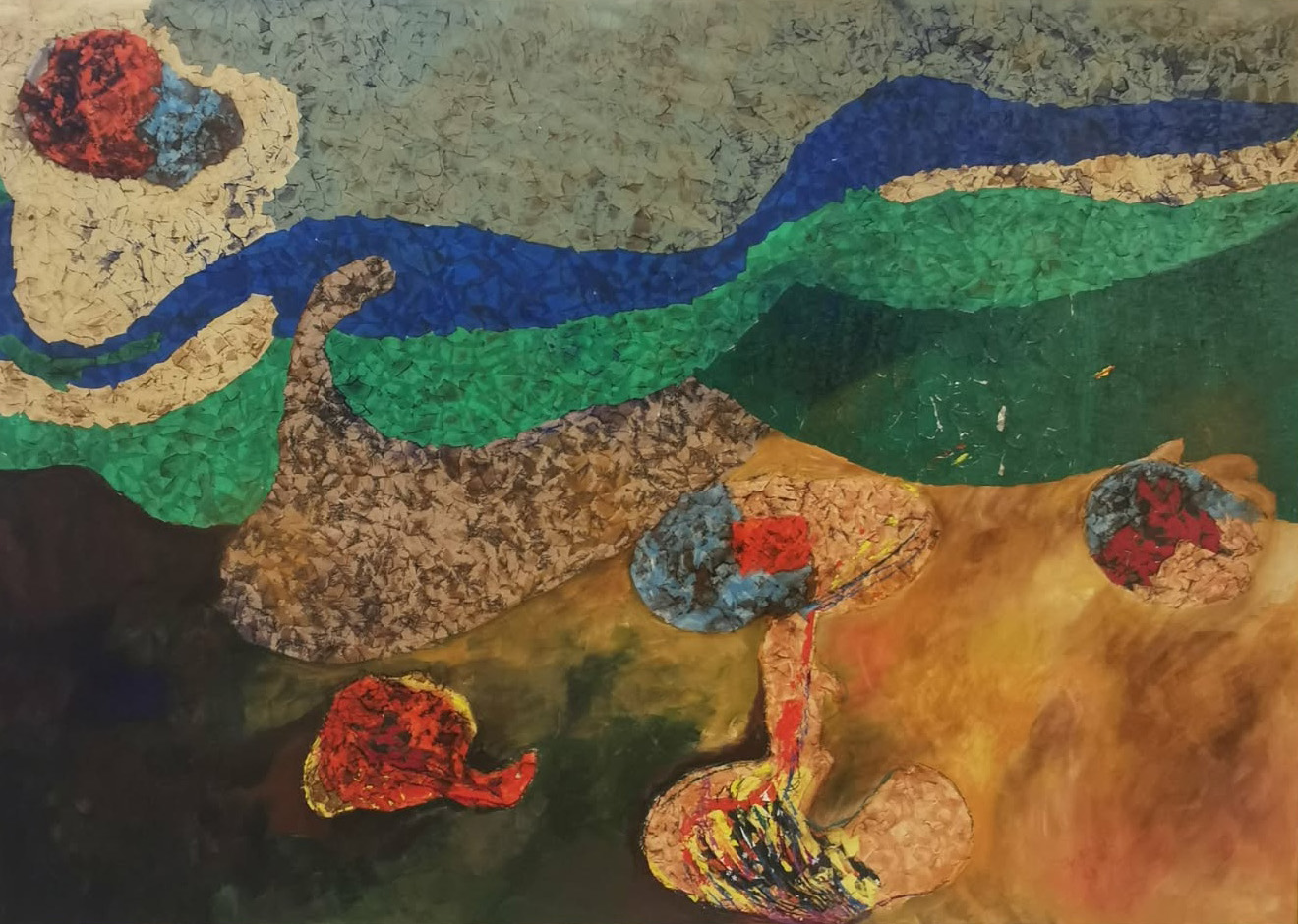
The title of the exhibition offers a meaningful entry point into the artist’s visual world. Metamorphosis is more than a simple change. It suggests movement from one form into another and reminds us that nothing in these paintings is completely fixed. A figure, a face, an animal, a landscape, or even a decorative pattern may begin as one thing and become something else within the artist’s imaginative space. The title also carries a long literary and cultural history. Ovid’s thought, “Omnia mutantur, nihil interit,” everything changes, nothing disappears, resonates with the works presented in this exhibition. Forms change here, but they do not vanish. They leave traces in color, texture, fragments of bodies, faces, animals, landscapes, and ornamental surfaces.
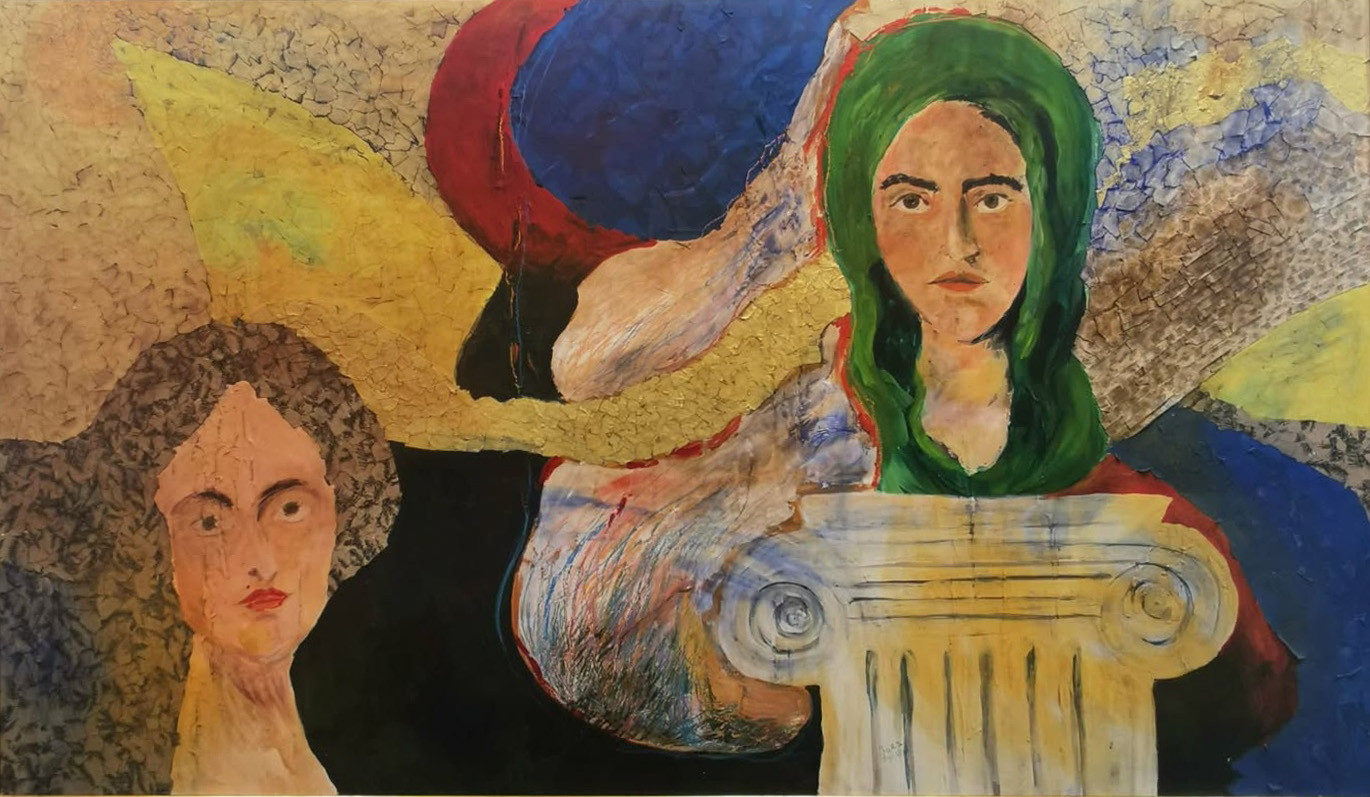
One of the most compelling qualities of Metamorphoses is its openness to interpretation. The paintings do not offer one simple meaning, nor do they ask the viewer to arrive at a final explanation. At first, the eye may be drawn to the strong colors, unusual figures, rich surfaces, and almost playful exaggeration of form. Yet a slower look reveals a more complex visual language. The colors seem to speak. The faces and bodies speak. Even the missing eyes and absent facial features carry meaning.
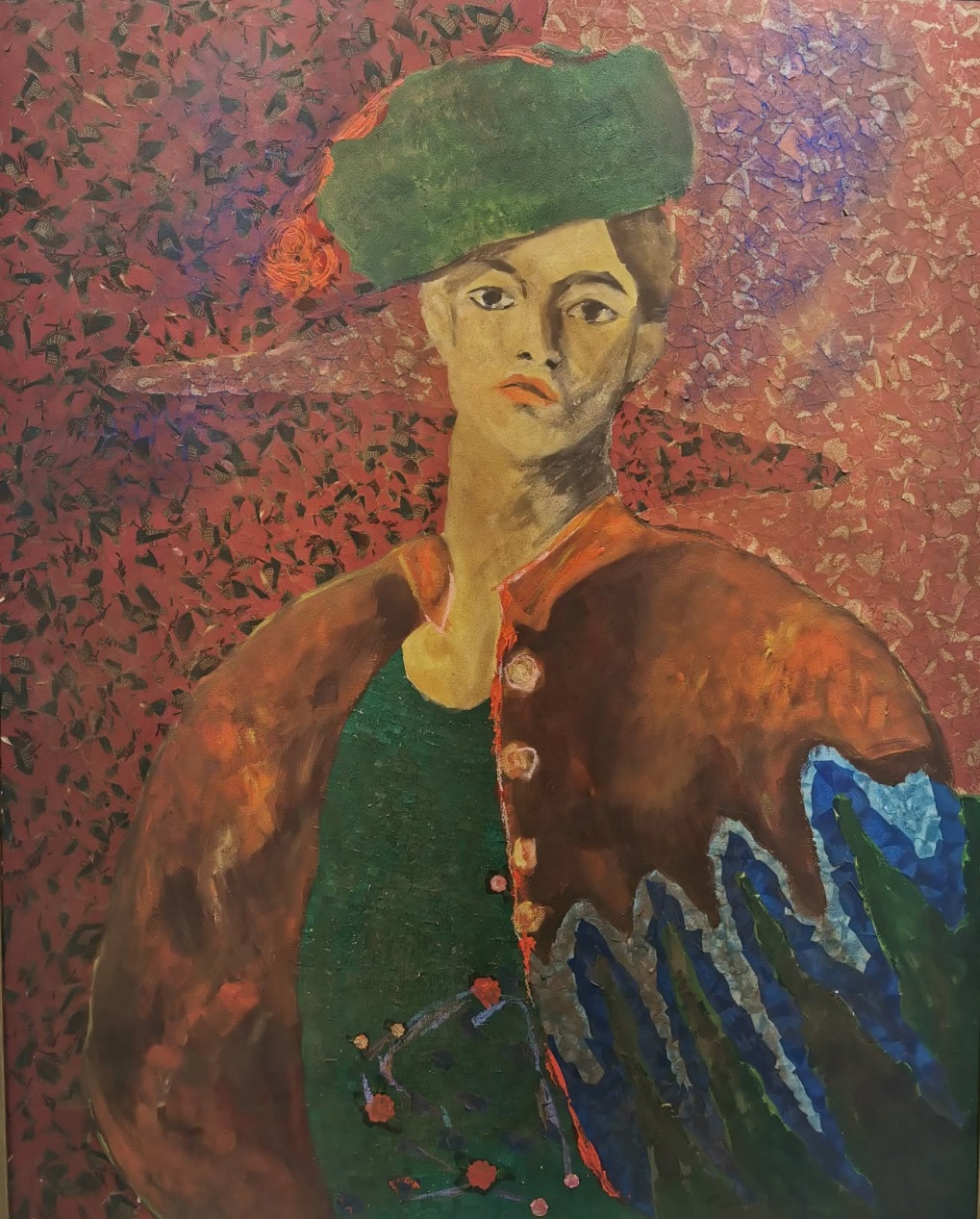
Some figures appear ceremonial, almost as if they belong to a court, a ritual, or a stage. Others are faceless or eyeless, and this absence becomes one of the most expressive elements of the exhibition. These figures may suggest blindness, refusal to see, invisibility, or a movement away from ordinary realism into a more symbolic space. Their garments, ornaments, animals, decorative surfaces, and mask-like faces also seem to resist a clear definition of time. They create a world suspended between memory, theatre, dream, and imagination, as if they were fragments of stories that could have happened long ago or could still be unfolding before us.
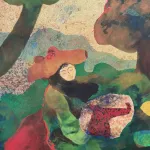
Skopljak-Viteškić’s works may be described as contemporary mixed-media paintings with a strong sense of ornament, theatricality, and expressive color. They are not realistic, and they do not attempt to be. Instead, they exaggerate, reshape, and transform recognizable forms. The style is contemporary, yet it also carries echoes of older visual worlds: ceremonial clothing, decorative surfaces, symbolic animals, masks, and the richness of almost neo-baroque excess.
The artist’s attention to surface, material, and technique is central to the exhibition. Layers, collage-like elements, ornaments, and textures do not function as decoration only. They become part of the painting’s meaning, suggesting memory, time, transformation, and the traces that remain when forms shift from one state into another.
The works also invite a literary reading. They behave less like straightforward descriptions and more like visual poems or fragments of stories. A landscape may become an emotional space. An animal may become a symbol, a companion, a witness, or an ironic presence. A decorative surface may become part of how the painting speaks.
The central impression of the exhibition may be summarized in one sentence: form is not a boundary, but a passage. Or, in Bosnian: oblik nije granica, nego prolaz. A face can become a mask. A body can become a costume. A landscape can become a memory. A color can become a voice. This is why Metamorphoses is such a fitting title. The exhibition presents transformation not only as a theme, but also as an invitation to transform the way we look: to slow down, notice details, accept ambiguity, and allow one painting to carry more than one possible meaning.
Through its strong colors, textured surfaces, symbolic figures, and open-ended forms, Metamorphoses creates a space in which painting becomes both image and question. It invites viewers to follow the movement of forms and to recognize that transformation is not only represented on the canvas but also happens in the act of seeing itself.